

Search visibility and content intelligence covers how a brand appears across both traditional search engines and AI answer systems such as ChatGPT, Gemini, Perplexity and Google AI Overviews.
NSIT Global helps organisations track where they are cited, understand why competitors appear instead, and structure content so AI systems can find, understand and reference it accurately.
SEO, AEO & Generative Engine Intelligence
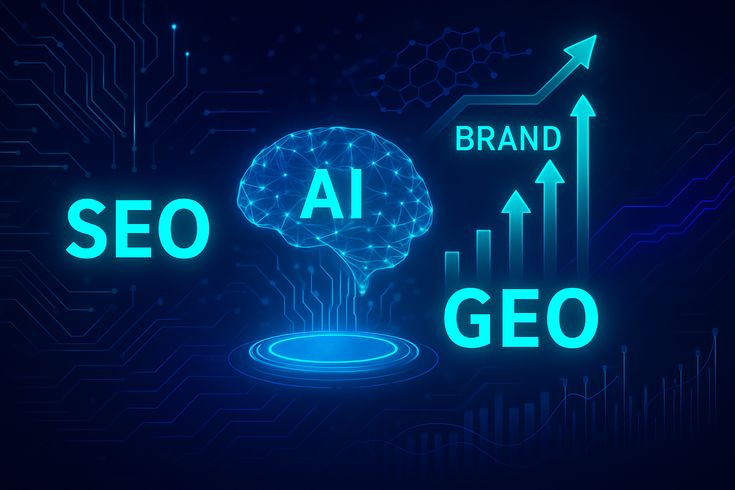
SEO, AEO & Generative Engine Intelligence helps brands improve how they appear across traditional search and AI-generated answers. It combines search optimization, answer visibility, and generative engine performance into one strategy. The goal is to make content easier for both search engines and AI systems to understand, trust, and surface. This helps brands stay visible in a search environment that is increasingly driven by AI responses, citations, and answer layers.
AI Answer Visibility Tracking
AI Answer Visibility Tracking helps you measure whether your brand appears in AI-generated answers, summaries, and recommendation sets. It shows where your content is being mentioned, cited, or left out across different prompt types. This makes it easier to understand your true visibility beyond classic search rankings. It also helps identify which pages, topics, or prompts need stronger coverage. The result is a clearer view of AI discovery performance.

Search, Citation & Authority Monitoring
Search, Citation & Authority Monitoring helps track how often your brand is referenced across search and AI answer environments. It measures source mentions, citation patterns, and authority signals that influence visibility. This is important because AI systems often choose trusted, reusable, and clearly supported sources. Monitoring these signals helps brands understand how authority is being built or lost. It also supports stronger content and digital trust strategies.

Content Readiness & Optimization
Content Readiness & Optimization ensures your pages are structured for both search engines and AI systems. It focuses on clarity, completeness, relevance, and answer usefulness. Well-prepared content is more likely to be cited, summarized, and reused by generative engines. This process also helps identify gaps in topic coverage and answer quality. It turns content into a stronger asset for discovery and engagement.

AI-Based Keyword Discovery & Topic Clustering
AI-Based Keyword Discovery & Topic Clustering helps uncover the topics, questions, and related terms that matter most to your audience. It groups related ideas into clusters so content can be planned around broader intent rather than isolated keywords. This improves topical depth and helps AI systems better understand your expertise. It also supports more organized and scalable content planning. The approach strengthens both SEO and AI visibility.

Competitor Visibility & Benchmarking
Competitor Visibility & Benchmarking helps compare your AI search presence against competing brands. It shows which competitors are appearing more often in answers, citations, and generative results. This makes it easier to see what topics they own and where your brand is missing. Benchmarking also helps identify patterns in content structure, authority, and prompt coverage. That insight can guide a more effective visibility strategy.

Generative Search Performance Insight
Generative Search Performance Insights help you understand how your brand performs inside AI-powered search experiences. It looks at visibility, citations, answer inclusion, and recurring prompt patterns. These insights reveal whether your content is influencing discovery in AI-driven environments. They also help prioritize updates that improve performance over time. This gives teams a practical way to measure progress in generative search.

Frequently Asked Questions
What is Generative Engine Optimisation (GEO)?
GEO is the practice of structuring content so AI systems can understand, trust and cite it in generated answers. Where SEO targets search result rankings, GEO targets inclusion in the answer itself.
What is the difference between SEO and AEO?
SEO focuses on ranking in search result pages. AEO, or Answer Engine Optimisation, focuses on appearing within direct answers and AI-generated summaries — situations where the user may never click through to any website.
How is AI answer visibility measured?
By tracking whether a brand appears in AI-generated responses across a range of prompts, how often it is cited, and which competitors appear alongside or instead of it. This differs from keyword rank tracking, since answers vary by phrasing.
Why does a website rank well on Google but not appear in AI answers?
AI systems extract information differently from search crawlers. Content written as continuous marketing prose ranks acceptably but is hard to quote. Content structured with clear definitions, direct answers and schema markup is far more likely to be cited.
Does AI visibility replace traditional SEO?
No — it extends it. Traditional search still drives most discovery, but a growing share of queries are answered without a click. Organisations need both: ranking for search traffic, and citation for AI-mediated discovery.