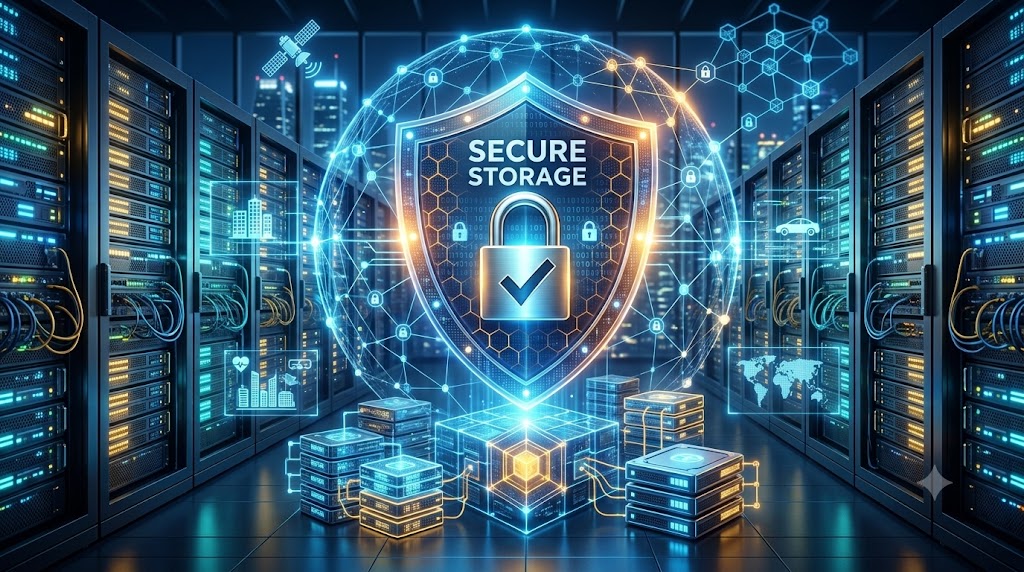
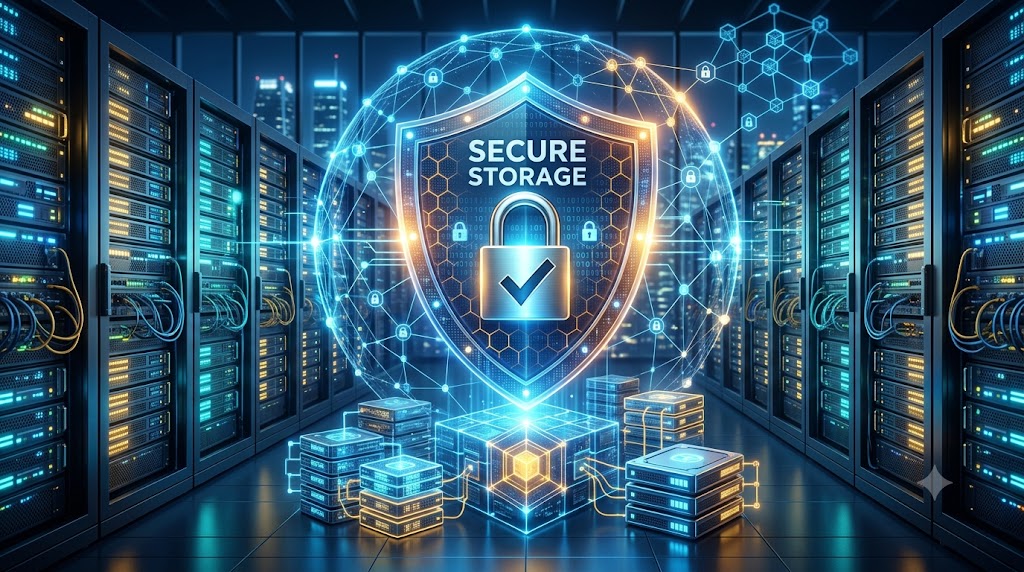
Data security and storage covers how organisations store, protect, back up and recover their information — spanning SAN and NAS systems, backup appliances, disaster recovery replication and long-term archive.
NSIT Global deploys storage architectures built for resilience, with ransomware protection, immutable backups and quantum-safe encryption for data that must remain confidential for decades.
Quantum-Safe SAN
Quantum-Safe SAN is designed to protect storage networks against emerging quantum-era threats while maintaining high performance and reliability. It strengthens the storage fabric with future-ready security controls that help safeguard mission-critical data. The solution is especially relevant for enterprise environments where secure data transport and long-term protection are essential. It supports resilient, high-speed storage operations without compromising security. This makes it a strong foundation for modern enterprise storage infrastructure.

Ransomware-Resilient NAS
Ransomware-Resilient NAS helps protect stored data from encryption attacks, unauthorized changes, and destructive malware activity. It is built to support secure backup practices, recovery readiness, and continuous data availability. The solution focuses on maintaining protected copies of important information so organizations can restore operations quickly after an incident. It is valuable for enterprises that need dependable local storage with strong resilience. This makes NAS a critical part of modern cyber recovery planning.
Secure Backup Appliance
Secure Backup Appliance provides a protected environment for storing backup data with strong control and reliability. It supports secure retention, controlled recovery, and safe backup workflows for business-critical information. The appliance approach helps organizations keep backup infrastructure isolated and manageable. It is particularly useful when resilience and data protection must work together. This creates a dependable layer for enterprise continuity and recovery.
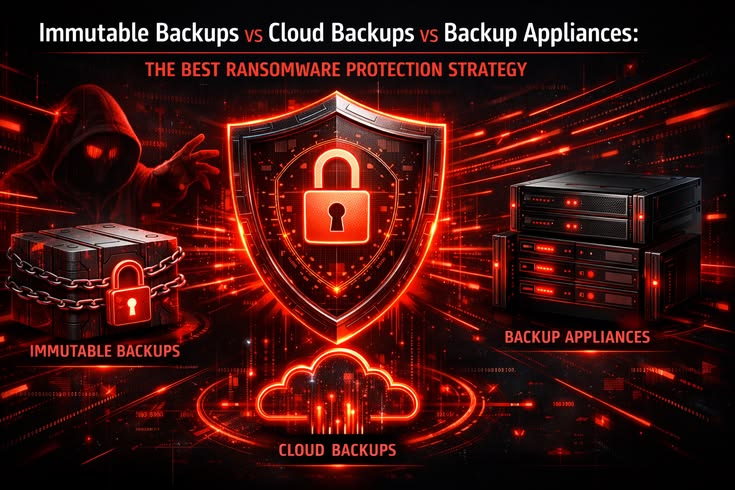
Data Integrity Dedup
Data Integrity Deduplication helps reduce storage consumption while preserving the accuracy and reliability of backed-up data. It ensures deduplicated data remains consistent and recoverable through integrity checks and validation processes. This is important for storage environments where efficiency and trust must both be maintained. The approach supports long-term backup optimization without compromising protection. It improves storage efficiency while keeping data dependable.

DR Replication Platform
DR Replication Platform enables secure replication of data to support disaster recovery and business continuity. It helps organizations maintain secondary copies of critical information in case of outages, attacks, or system failures. The platform is designed to improve restoration speed and reduce downtime during an incident. It is essential for enterprises that cannot afford prolonged service disruption. This makes recovery faster, safer, and more predictable.

Immutable LTO Archive
Immutable LTO Archive provides long-term storage with protection against modification, deletion, and tampering. It is ideal for keeping archived information secure for compliance, retention, and historical reference. The immutable model helps ensure that stored records remain trustworthy over time. This is especially useful for organizations that must preserve data integrity for years. It adds a durable final layer to the storage and protection strategy.
Frequently Asked Questions
What is ransomware-resilient storage?
Ransomware-resilient storage maintains protected copies of data that attackers cannot encrypt or delete, typically through immutable snapshots and separated backup credentials. This allows recovery without paying a ransom.
What is an immutable LTO archive?
An immutable LTO archive writes data to tape in a form that cannot be altered or deleted once written. Because tapes are physically offline when not in use, they provide a final recovery layer that network-based attacks cannot reach.
What is the difference between SAN and NAS?
SAN presents storage as raw block devices over a dedicated network, suited to databases and virtualisation requiring high performance. NAS presents storage as shared file systems over standard networks, suited to file sharing and collaboration.
How does DR replication support business continuity?
Disaster recovery replication keeps synchronised copies of critical data at a separate site. If the primary location fails through outage, disaster or cyber attack, operations can be restored from the replica rather than from scratch.
What is the 3-2-1 backup rule?
Keep three copies of data, on two different media types, with one copy off-site. It remains the baseline for backup design because it protects against hardware failure, site-level disaster and single-system compromise simultaneously.