

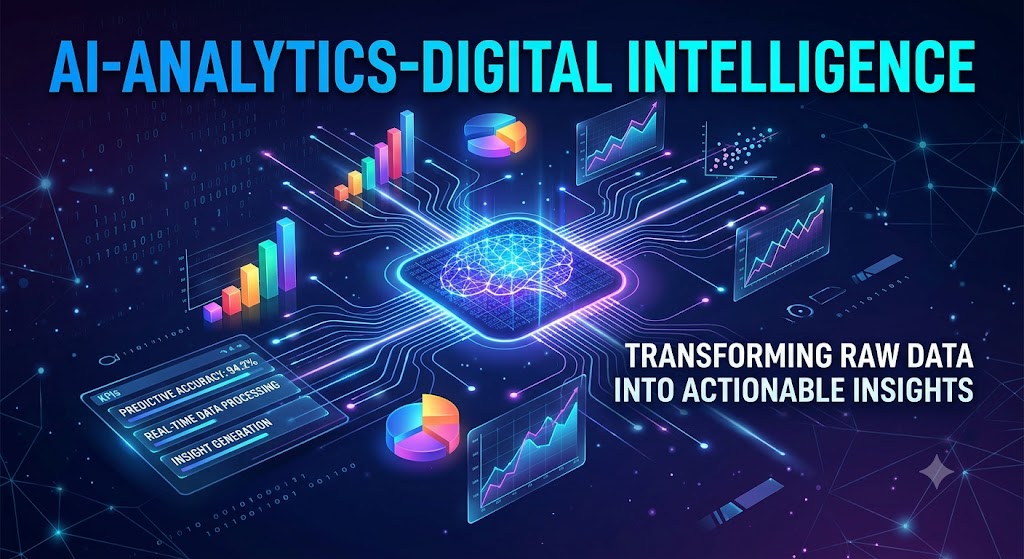
AI, Analytics & Digital Intelligence
Artificial Intelligence, Data Analytics & Digital Intelligence
AI and analytics turn organisational data into decisions — through machine learning models, predictive analytics, computer vision, document understanding and conversational assistants.
NSIT Global deploys these capabilities on-premises, in the cloud or across hybrid environments, so organisations handling sensitive data can adopt AI without moving that data outside their own infrastructure.
AI Model Deployment (On-Premise / On-Cloud)
AI Model Deployment helps organizations move trained models from development into real-world use. It supports both on-premises and cloud environments depending on privacy, performance, and scalability needs. The solution ensures models can be connected to business systems, applications, and user-facing workflows. It also supports secure operation, version control, and monitoring after release. This creates a reliable foundation for practical AI adoption.
AI Strategy & Consulting
AI Strategy & Consulting helps organizations identify the right use cases, define priorities, and build a practical roadmap for adoption. It focuses on AI readiness, governance, value creation, and implementation planning. The goal is to align AI initiatives with business objectives and measurable outcomes. This includes understanding current capabilities, risks, and future opportunities. It helps turn AI from experimentation into a structured business strategy.
Generative AI Assistants (On-Premise / On-Cloud)
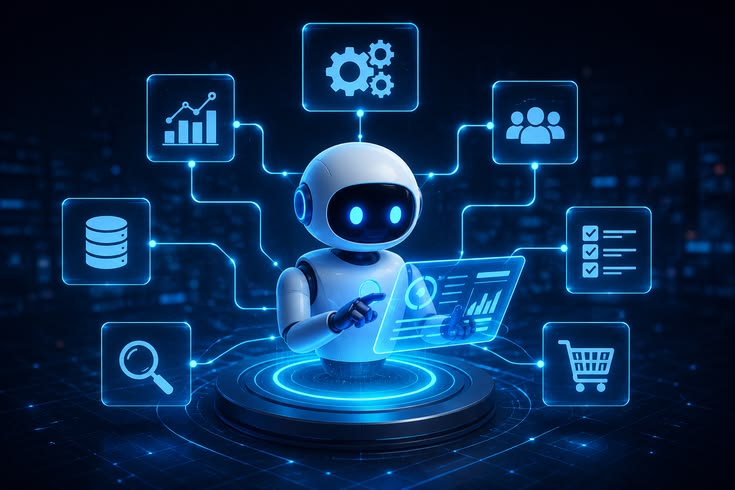
Generative AI Assistants help users interact with systems through conversational, intelligent, and task-oriented experiences. They can support knowledge access, content generation, workflow assistance, and decision support. These assistants may be deployed on-premises or in the cloud depending on control and security requirements. They are useful for improving productivity across teams and functions. The result is faster access to information and better user engagement.

Predictive Analytics & ML (On-Premise / On-Cloud)
Predictive Analytics & Machine Learning help organizations forecast outcomes, identify patterns, and make smarter decisions from data. The solution supports modeling for trends, risk, behavior, and operational planning. It can be deployed in on-premises or cloud environments based on business and compliance needs. These capabilities enable proactive decision-making instead of reactive response. They are valuable across operations, finance, customer insight, and risk management.

Data Analytics & BI (On-Premise / On-Cloud)
Data Analytics & Business Intelligence transform raw information into usable insights through reporting, dashboards, and analytical models. The solution helps organizations track performance, monitor trends, and support business decision-making. It works across on-premises and cloud environments for flexible deployment. Strong analytics also improves visibility into operations and strategic outcomes. This makes data easier to understand and act upon.
Computer Vision & Video AI (On-Premise / On-Cloud)
Computer Vision & Video AI help organizations analyze images, video streams, and visual events automatically. This can support inspection, monitoring, detection, recognition, and operational intelligence. The solution is useful in environments where visual data must be processed at scale and in real time. It can run in on-premises or cloud setups depending on latency and privacy needs. This expands automation into physical and visual domains.

NLP & Document AI (On-Premise / On-Cloud)
NLP & Document AI help systems read, understand, classify, and extract information from text-based content. This supports document processing, search, summarization, and language-based automation. The solution is especially useful for organizations handling large volumes of unstructured information. It can be deployed securely in cloud or on-premises environments. This makes text-heavy workflows faster, smarter, and more efficient.
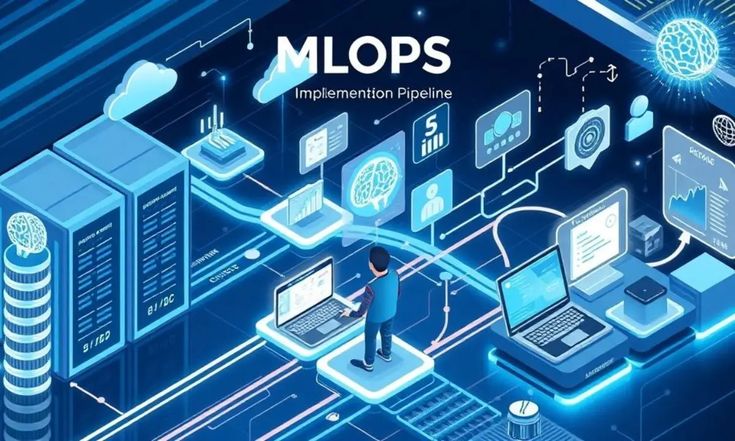
MLOps & AI Lifecycle Management
MLOps & AI Lifecycle Management help organizations operationalize AI with control, reliability, and scalability. It covers model versioning, deployment workflows, monitoring, retraining, and governance across the full AI lifecycle. The goal is to keep models performing well after production release. This also helps reduce risk and improve consistency across AI systems. It creates a sustainable framework for long-term AI success.
Frequently Asked Questions
Can AI models be deployed on-premises?
Yes. Models can run entirely within an organisation's own infrastructure, keeping sensitive data inside the network. This is often necessary for defence, government and healthcare workloads where data cannot be sent to external services.
What is MLOps?
MLOps is the operational discipline of running machine learning in production. It covers model versioning, deployment pipelines, performance monitoring, retraining schedules and governance — ensuring models keep working correctly after release rather than degrading unnoticed.
What business problems can computer vision solve?
Computer vision automates tasks that require interpreting images or video: quality inspection, safety monitoring, object counting, document scanning and access control. It extends automation into physical environments where manual review would not scale.
What is the difference between predictive analytics and generative AI?
Predictive analytics forecasts outcomes from historical data — demand, risk, failure probability. Generative AI produces new content such as text, summaries or code. Most organisations use both: prediction for planning, generation for productivity.
How long does an AI deployment typically take?
Timelines depend on data readiness more than model complexity. Organisations with clean, accessible data can deploy a focused use case in weeks; those needing data consolidation and governance work first should plan for a longer initial phase.